
Architects and engineers face a unique blend of technical, legal, and practical challenges when claims arise. That’s why having a claims team that truly understands the profession—not just the policy language—is essential. Our approach is built on real-world experience, a structured and proactive process, and a commitment to staying ahead of emerging risks in the design and construction industry.
A&E Claims Expertise That Goes Beyond the Policy
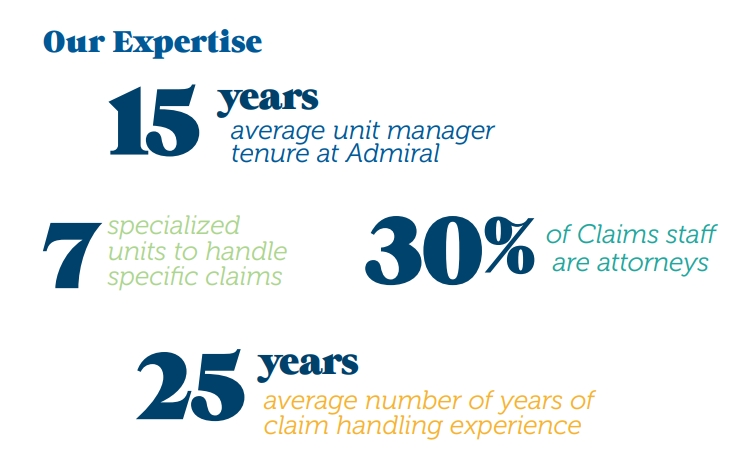
Admiral’s claims team brings deep, specialized experience, with unit managers averaging 15 years of tenure, seven dedicated units focused on specific claim types, and a staff in which 30% are attorneys. Our claims professionals average 25 years of handling experience, ensuring highly skilled, knowledgeable support for every claim.
This combination of hands-on construction knowledge, legal training, and claims expertise gives our team a rare ability to understand the full context of a claim. We don’t just read the technical details—we’ve lived them. That perspective helps us evaluate issues more accurately, communicate more effectively with insureds, and drive better outcomes.
Related: Watch Q&A with our Claims Expert
A Structured Process That Simplifies the Claims Experience
When a claim arises, insureds want clarity, speed, and confidence that their concerns are being handled by someone who understands the work they do. Our structured claims process is designed with exactly that in mind.
We engage early, communicate proactively, and set clear expectations from the start. Because we understand the technical nuances of A&E claims, we ask the right questions upfront—reducing unnecessary back-and-forth and accelerating resolution. The result is a smoother, more transparent experience that helps insureds stay focused on their business rather than the claim.
Rectification Coverage: Preventing A&E Claims Before They Escalate
One of the most powerful tools in our A&E policy is rectification coverage. Unlike traditional claims coverage, which responds after a claim is made, rectification coverage steps in earlier—when a covered error is discovered during construction but before it causes damage or triggers a third-party claim.
This allows insureds to correct issues immediately, keeping projects on track and relationships intact. It minimizes legal exposure, reduces reputational risk, and often prevents a small problem from becoming a costly dispute. It’s a proactive benefit that reflects our broader philosophy: protecting not just the insured’s liability, but their work, their time, and their professional standing.
Real-World A&E Claims Support: Exceeding Expectations When It Matters Most
One case that stands out involved an HVAC engineering firm facing a potential multi-party dispute after a design error affected more than 100 condominium units. The issue was discovered mid-construction, and the insured was under immense pressure—from the owner, the general contractor, and their own client.
Our team stepped in immediately. With our deep understanding of construction dynamics, we quickly assessed the technical aspects of the issue, coordinated with defense counsel, and brought in a qualified expert to evaluate the design. We worked closely with the insured to navigate the situation and ultimately avoid litigation.
What made the difference wasn’t just the outcome—it was the speed, clarity, and empathy we brought to a high-stress moment. That’s the standard we aim to deliver on every claim.
Emerging Trends: AI, Automation, and the Future of A&E Risk
The design and construction landscape is evolving rapidly, and so are the risks. One of the most significant trends we’re seeing is the growing use of AI and machine learning in design workflows. Tools like generative design and intelligent modeling offer tremendous efficiency—but they also introduce new challenges, such as:
- Errors embedded in automated outputs
- Unclear lines of professional responsibility
- New types of allegations tied to algorithm-driven decisions
As these technologies become more common, we’re proactively adapting our underwriting and claims strategies to address the complexities they create. Staying ahead of these trends ensures our insureds are protected not just today, but as the profession continues to evolve.
The Secret Behind Admiral’s Superior A&E Claims Handling
Looking Ahead: Partnering with A&E Professionals Through Every Stage
At the heart of our A&E policy is a deep understanding of the profession and a commitment to anticipating what comes next. From hands-on construction and legal experience to a structured claims process and proactive services like contract review and rectification coverage, our approach is built to support insureds at every stage of their work.
We don’t just respond to risk—we help prevent it, manage it, and navigate it with confidence.
Frequently Asked Questions
What makes your claims team uniquely qualified to handle A&E claims?
What sets our team apart is the depth and diversity of real-world experience we bring to A&E claims. Personally, I’ve worked across the construction spectrum—as an estimator and project manager for a design-build contractor, and as a project manager for a self-performing subcontractor. I hold a BS in Construction Management, have defended construction cases as an attorney, and have spent the last eight years specializing in A&E claims. This multifaceted background gives me—and our team—a unique ability to understand the technical, legal, and practical dimensions of every claim we handle.
How does your structured process streamline the claims experience for insureds?
Our process is designed to simplify and accelerate the claims experience for insureds. We prioritize early engagement, thorough proactive communication—so insureds know what to expect and when. Because we understand the technical nuances of A&E claims, we ask the right questions upfront, reduce back-and-forth, and resolve issues more efficiently. The result is a smoother, more transparent experience that gets insureds back to business faster.
What value-added services are available to our insureds and why they matter?
Beyond our claim services, we also offer additional value-added services designed to help insureds prevent claims before they happen—and navigate them more effectively when they do. One standout offering is contract review, provided by SmartRIsk. This service helps design professionals identify and address risky language in their agreements before they sign, which can significantly reduce exposure down the line.
Rectification coverage is often seen as a proactive benefit to the Insured, can you explain what it is, when it applies, and how it differs from traditional claims coverage?
Rectification coverage is one of the most proactive tools we offer to insureds—and it reflects our commitment to solving problems before they become claims. It applies when a covered error is discovered during construction, but before it causes damage or triggers a third-party claim. Instead of waiting for litigation, rectification coverage allows the insured to correct the issue immediately, keeping the project moving and relationships intact.
What makes it different from traditional claims coverage is its timing and purpose. Traditional coverage responds after a claim is made—often involving legal costs and reputational risk. Rectification coverage steps in earlier, helping insureds resolve issues quietly and efficiently. It’s a powerful example of how our policy isn’t just reactive—it’s built to protect our insureds’ work, reputation, and bottom line.
Can you share an example of how your claims team exceeded an insured’s expectations in a tough situation?
One claim that stands out involved a rectification claim against an HVAC engineering firm, which faced potential multi-party litigation stemming from a design issue discovered mid-construction. They made a design error that impacted over 100 condominium units. The insured was overwhelmed, facing pressure from the owner, the GC, and their own client, with deadlines slipping and reputational risk mounting.
Our team stepped in immediately. Because of our deep understanding of construction dynamics, we were able to quickly assess the technical aspects of the claim, coordinate with defense counsel, and engage a qualified expert to evaluate the design. We also worked with the insured to facilitate a resolution that avoided litigation.
What exceeded expectations wasn’t just the outcome—it was the speed, clarity, and empathy we brought to a high-stress situation.
Have you seen any emerging trends in A&E claims, such as new types of allegations or litigation tactics? How are you and your team proactively addressing these developments?
We’re seeing several emerging trends in A&E claims that reflect the evolving nature of design and construction. One major shift is the growing use of AI and machine learning in design workflows. Tools like generative design and intelligent modeling are streamlining processes—but they also introduce new risks, such as errors embedded in automated outputs or unclear lines of professional responsibility. As AI becomes more prevalent, we’re proactively adapting our underwriting and claims strategies to address these complexities.
